

One Dashboard, Every Realm: See What Broke in 30 Seconds
You run 3 businesses from 9 tabs, and something breaks every single day. The cost isn't the fix, it's the 40 minutes of hunting. There's a 30-second command center pattern almost nobody builds.
Why Your Multi-Business Stack Is Silently Bleeding Hours Every Week
You opened nine tabs before your first coffee. Gmail, GitHub, Notion, Trello, Calendly, your payment processor, an uptime monitor, a spreadsheet, and that one dashboard you built and never check.
That's not a workflow. That's a scavenger hunt with a login screen. And there's one architectural decision that collapses all of it into a single surface, one most tutorials get backwards. I'll show you exactly what it is after we map the damage.
ActivTrak's 2026 report found focus sessions averaging roughly 13 minutes before interruption. Every tab switch resets that clock. Map your own morning: if you touched nine tools before 10am, you paid nine context-switch taxes before doing a single unit of real work.
Here's the part nobody wants to hear. Adding more AI tools made it worse, not better. In a survey of roughly 6,000 executives, over 80% of firms reported no measurable productivity lift from AI adoption, and 83% said workload actually increased. The tools arrived. The leverage didn't.
Your stack can't answer three questions fast: what broke, what's next, and are the numbers okay. Everything else is noise.
The 30-Second Test: Can Your Setup Answer These Three Questions Right Now?
Grab a stopwatch. Start it. Now answer: what broke, what's next, what are my KPIs, across every business you run.
Under 30 seconds means you have a command center. Over five minutes means you have a scavenger hunt, and you're losing the game daily.
Most founders fail this test, and the failure is invisible because it's distributed. The uptime alert lives in email. The failed payment lives in a processor dashboard. The stalled task lives in Trello. The unanswered client lives in a DM you forgot to star.
Now for the part nobody talks about: you don't have a tooling problem, you have a routing problem. Every failure signal has a home. None of them share an address.
Write yours down right now. Signal, location, who owns it. That list becomes your build spec.
One Data Hub, Filtered Realms: The Architecture That Ends Tool Sprawl
Stop syncing dashboards to dashboards. That's how you get stale numbers and duplicate alerts.
Instead, build one central workspace and create filtered views per business. Clients see their project. Teammates see their tasks. You see everything. Same data, different lenses, zero duplication.
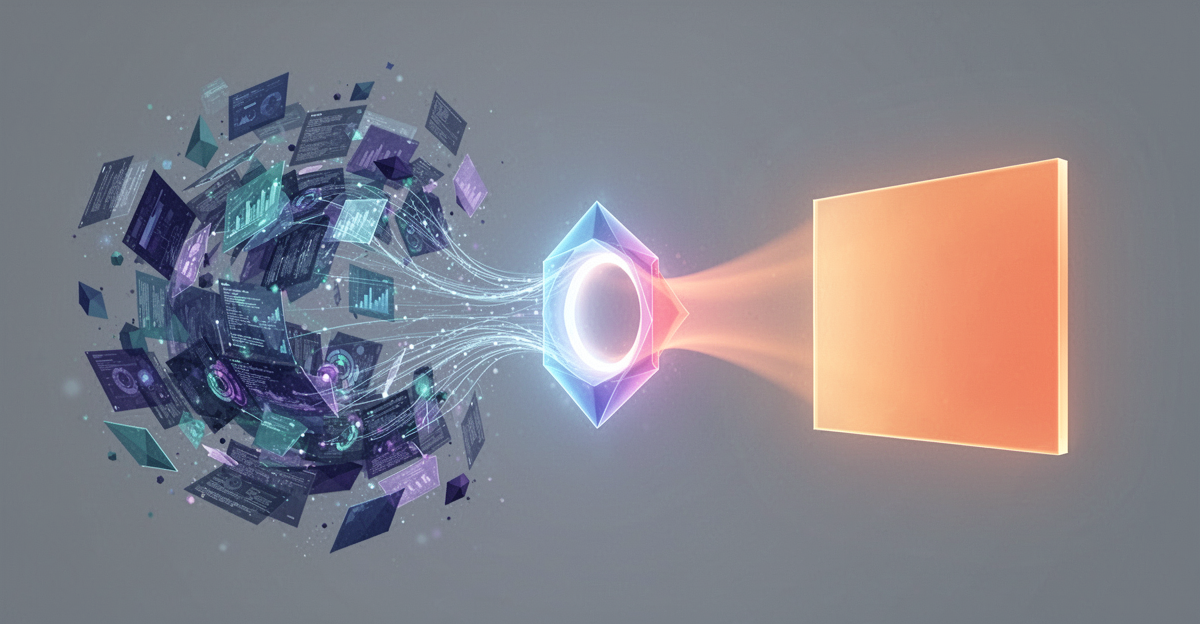
Route every tool through one pipeline. Gmail, GitHub, Notion, Trello, Calendly, your payment webhooks. One inbound stream, one source of truth. This is the pattern most tutorials skip, and it's the one that actually holds.
Then keep your agents single-purpose. One agent, one job, separate credentials, isolated containers. If your invoice-reconciliation agent breaks, it must not take down your uptime monitoring with it.
Agents without isolation are just distributed outages waiting for a trigger.
This mirrors where enterprises landed. Snyk's June 2026 telemetry found 33% of organizations now run agentic architectures, and 50.3% of those run both agents and MCP servers for cross-vendor connectivity. The industry didn't consolidate tools. It consolidated the surface.
With the plumbing set, here's what the three panels actually show.
What Broke, What's Next, Your KPIs: Wiring the Three Panels That Matter
Panel 1, What Broke: aggregate error feeds, failed jobs, and payment webhooks into one severity-sorted stream. Tag every item with an owner. If nobody owns it, it's not an alert, it's decoration.
Panel 2, What's Next: one shared task pipeline across all businesses, prioritized by staleness and batched by business-day. Batching is the context-switch killer. Group by business, not by urgency theater.
Panel 3, KPIs: pick exactly three numbers per business. Revenue, pipeline, delivery health. Surface deltas only, never raw tables. A number that doesn't move your next decision is a number you should delete.
Then connect MCP so your agents read and act across every tool without you opening a single tab. An agent that can check GitHub, read Notion, and post to Telegram is worth more than three dashboards you forget to refresh.
A dashboard is dead weight unless it changes what you do in the first five minutes.
From Dashboard to Daily Ritual: The 10-Minute Morning Loop
The 30-second scan: read three panels, tag anything red, close the tab. That's it. No drilling, no exploring.
The 10-minute triage: assign owners, defer non-critical items, let agents handle repeatable fixes end to end. Your job is judgment, not clicking.
Then the rule that keeps this alive: if a KPI panel hasn't changed your decisions in two weeks, delete it. Dashboards rot from sentimentality, not complexity.
Design your review gates now, not later. Agentic workflows only pay off when workflows, context, and human checkpoints are defined upfront. Retrofitting guardrails onto a live automation is how you get a very confident agent doing the wrong thing at scale.
Build It This Weekend: Your Command Center Stack, Step by Step
If you can describe it, you can build it. One account, one wallet, one identity, connected to everything you already use.
The takeaway: you don't need more tools, you need one surface that answers what broke, what's next, and are the numbers okay, in under 30 seconds.
Your next action: run the stopwatch test right now and write down your three failure signals. That list is your weekend build.
Which approach are you running today? One Realm or nine tabs? The tradeoffs are real, and I want to hear where your stack breaks first.